
Earth Day Sensory Box - Part 2 - Deserts and Ice Caps
- Mamatomo Mama

- Apr 18, 2018
- 2 min read

For part one of the Earth Day Sensory Boxes - please click here
These sensory boxes can be used to talk about the different kinds of animals that live in deserts and in the Arctic and Antartic regions. It will be fun for children to compare and contrast the differences between the hottest, driest places on earth and the coldest places. Children can learn which features each animal has developed over time to enable them to survive in such harsh environments - such as a camel's hump allowing it to go for long periods without water or sea lions having blubber around their body to keep them warm. The boxes can also be used to talk about the the problems that both landscapes face in our world today. Kids will enjoy playing freely with the cold, icy water and the sand-filled box once the lesson is over.
Deserts

In this box we have a scorpion, cobra, two-humped camel and a vulture. The area has few plants and is very dry. In recent decades, many deserts have grown in size. The Sahara, which is already the size of the the USA, has reportedly grown ten per cent in size since 1920. A quarter of the earth is already covered by desert and, with annual global temperatures growing, it is a concern that many desert areas are continuing to grow. This box is useful to highlight to kids the importance of not wasting water, even in our country. Also in the importance of trying to maintain balance in the environment. Pressures of increasing human population only creates additional problems in arid and semi-arid landscapes. We can talk to kids about taking care of wildlife and doing our bit to help the environment.
Ice Caps
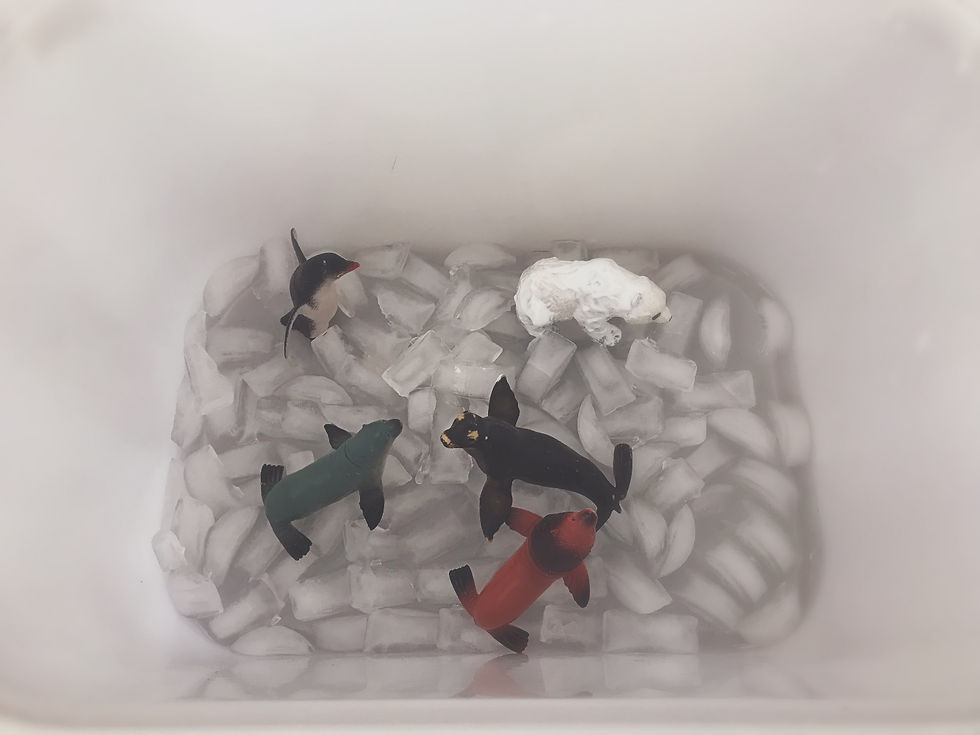
The Arctic and Antarctic regions are depicted by a bucket of ice and water. We have a polar bear (Arctic), penguin (Antarctic) and three sea lions (Antarctic). The ice cubes can be used to depict the break up of the ice caps and the effect of this on polars bears. Many starve because they are no longer able to traverse the areas in which they live to find food.
Sensory play is fun!
Although this topic has a serious undertone, kids of all ages will enjoy learning about the different animals and being able to play in the environments in which they live.
One more thing before we wrap this up....
If you are looking to buy something for yourself or someone else, and would also like to support the environment at the same time, take a look at this website. The companies that are featured on the site donate their profits to create positive social change in the world. I do not receive any commissions for providing this link.
#savetheplanet #dogoodgiftguide #earthday2018 #meltingicecaps #deserts #sensoryboxes #teachingkidsathome #environmentalissuesmatter


Comments